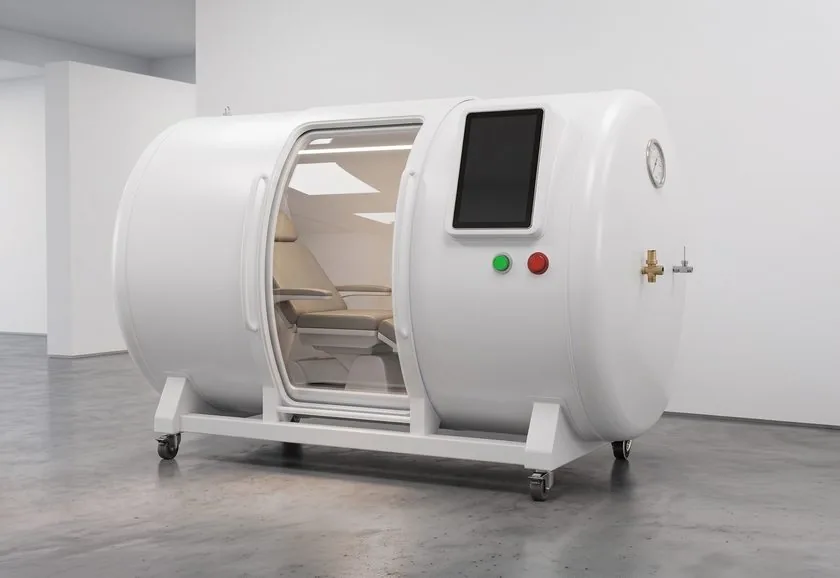
A hyperbaric chamber can cost anywhere from around £3,000 to over £200,000. That gap isn't markup - it's three different categories of product, with different build quality and very different outcomes for your body.
They share a name and very little else. What separates them is whether they can safely reach the oxygen dose the published research actually uses.
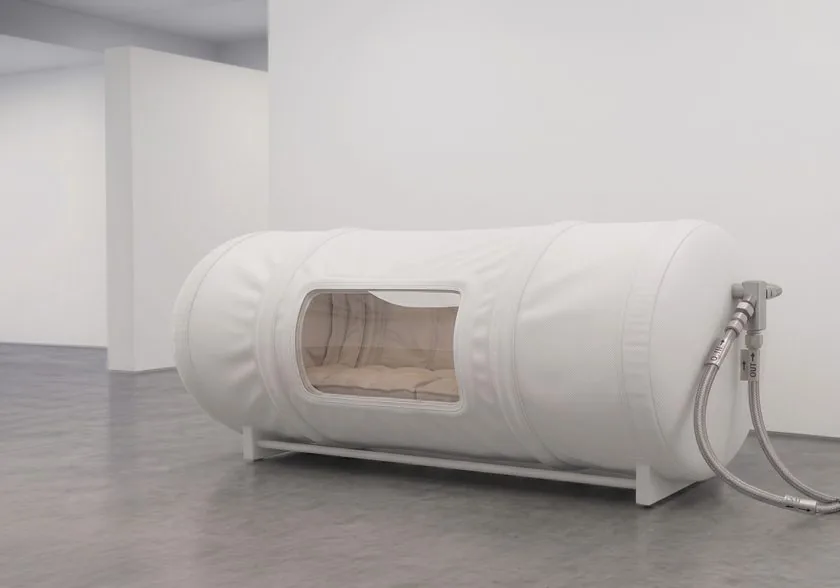


Hyperbaric therapy works by forcing extra oxygen into your blood. Two chambers can carry the same word on the label and deliver completely different amounts of it.
Two things set how much oxygen gets in: how hard the chamber pressurises, and how much of what you breathe is actually oxygen. A soft-shell cannot reach the pressure. A standard mask leaks chamber air around the seal and roughly halves the oxygen. Only a hard-shell at full pressure with a built-in breathing system reaches the dose the research uses - around fifteen times the dissolved oxygen of normal breathing.
These effects were documented at that dose, in controlled trials. A chamber that delivers a fraction of it is not the chamber those trials used.

In a blinded, placebo-controlled trial, trained middle-aged athletes completed 40 sessions at 2.0 ATA. The group using HBOT showed gains in VO₂ max and anaerobic threshold against the placebo group, with increased mitochondrial respiration and mass measured from muscle biopsy. In plain terms, the same effort sat further below the athlete's limit.
In the same trial, those gains came with more of the cell's own power plants - the mitochondria - measurably increased and working harder. Where that reaches beyond stamina is being actively studied.
Measured in healthy people, at the 2.0 ATA dose these chambers reach.
All four of these have to be present to match the oxygen dose the research uses - the dose behind the performance and the repair response.
Soft-shells top out near 1.3 ATA - below the pressure the studies use.
A loose mask leaks chamber air around the seal and delivers roughly 40% oxygen. A built-in system delivers close to 100%.
Enough flow to feed the breathing system at pressure, not run short mid-session.
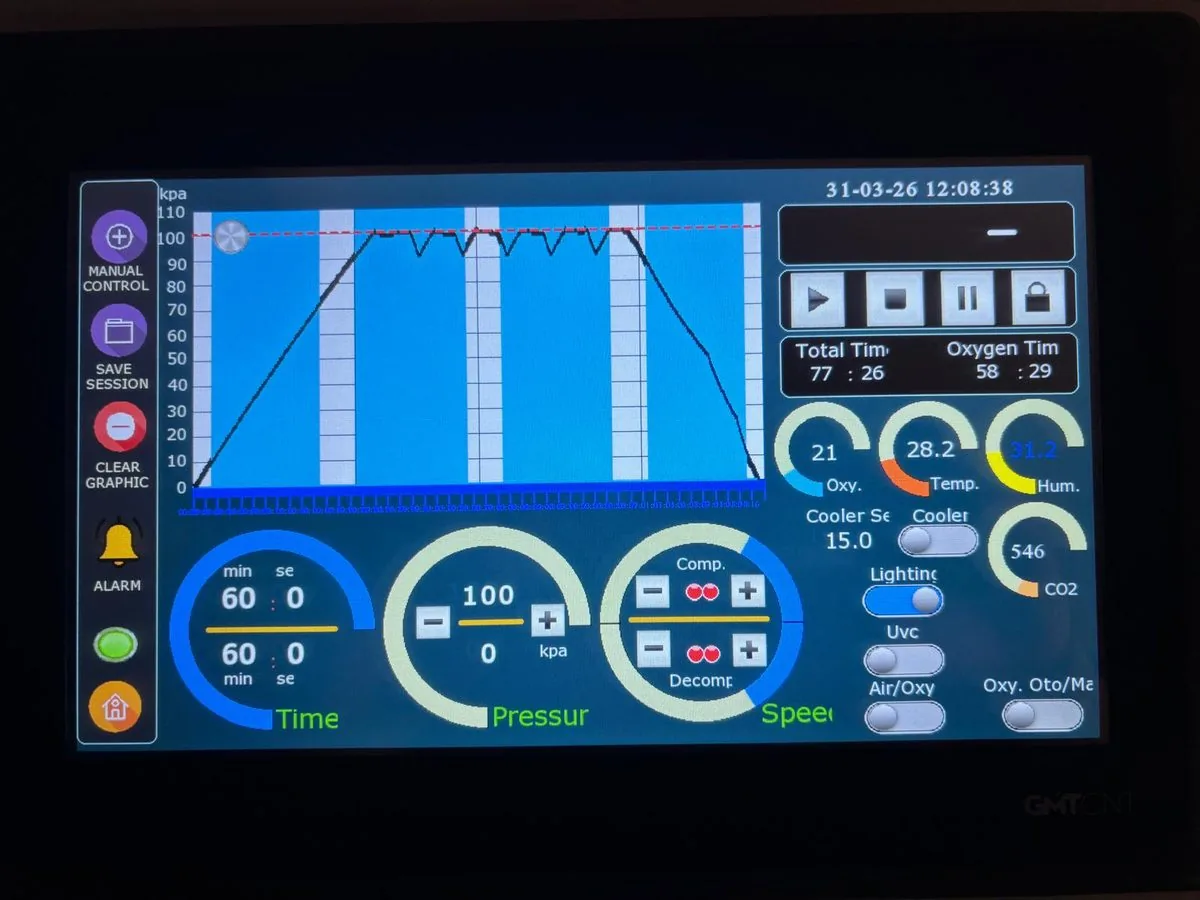
The controlled rise-and-fall in oxygen that regulates the oxygen in the tissue and potentially strengthens the cellular response - delivered by the system, not timed by hand.
A chamber is a pressure vessel you sit inside breathing oxygen. Done properly, the safety is engineered in and invisible. Key points to check:
Mechanical emergency stops, and a 90-second emergency depressurisation that needs no electrical power.
Continuous monitoring of the chamber environment, managed by the system, not by you.
Breathing air filtered; exhaled oxygen scavenged out by the breathing system so it cannot build up. Windows in acrylic, as used in aviation.
These aren't paperwork. Each one is critical, and each confirms a specific safety requirement worth looking for on any chamber.
Every HPO.TECH unit inspected and pressure-tested before it leaves the factory - by a classification body that normally certifies submarines and nuclear plants.
Structural integrity of the pressure vessel - hull, welds, viewports - at operating pressure.
The oxygen delivery and scavenging safety standard.
The standard written specifically for pressure vessels with people inside.
Conformity assessed against the applicable requirements - not self-declared.
Audited manufacturing quality - every chamber built to the same documented process.
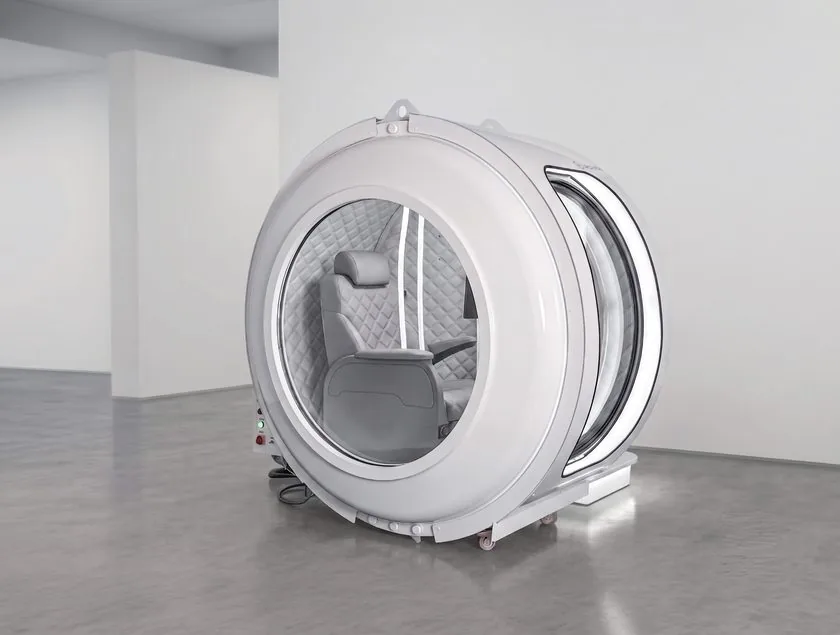
A session runs 60 to 90 minutes, and the protocols are built around completing the course, not a single visit. Comfort is what gets a person through it.
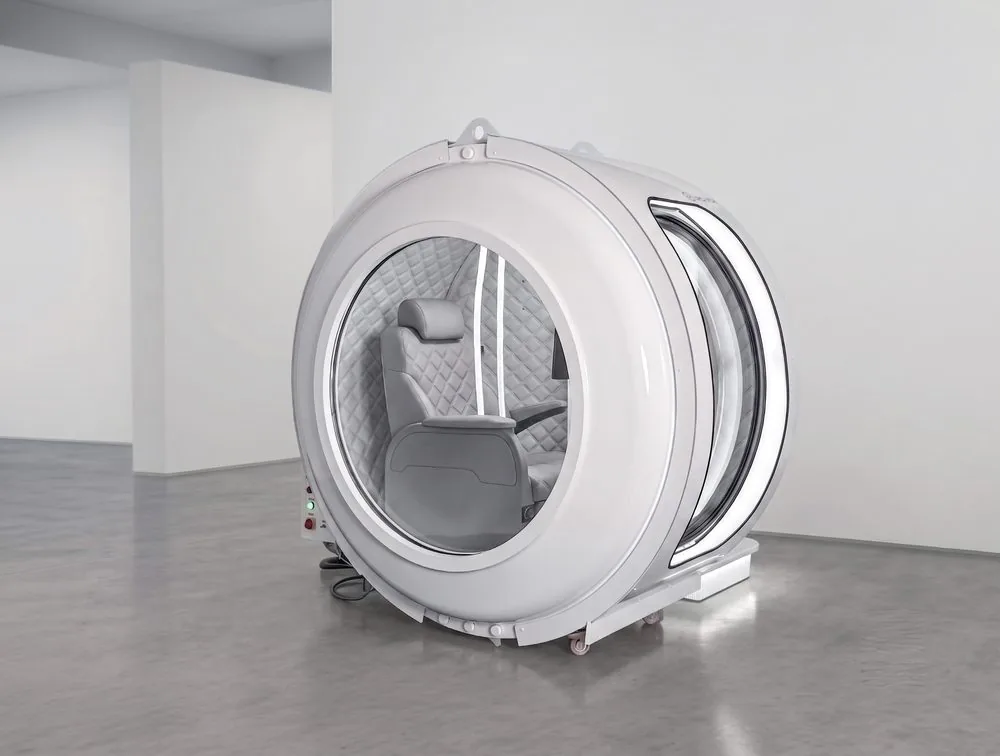
And it has to belong in the room. A chamber for a home, wellness space or club isn't hospital equipment parked in a corner. Exterior finish, interior materials, lighting and upholstery are all customisable to the space - so it reads as part of the room, not an intrusion into it.

Either way, tell us your situation - the space, the use, where you are - and we'll tell you exactly what it takes and what it costs.
Get chamber advice